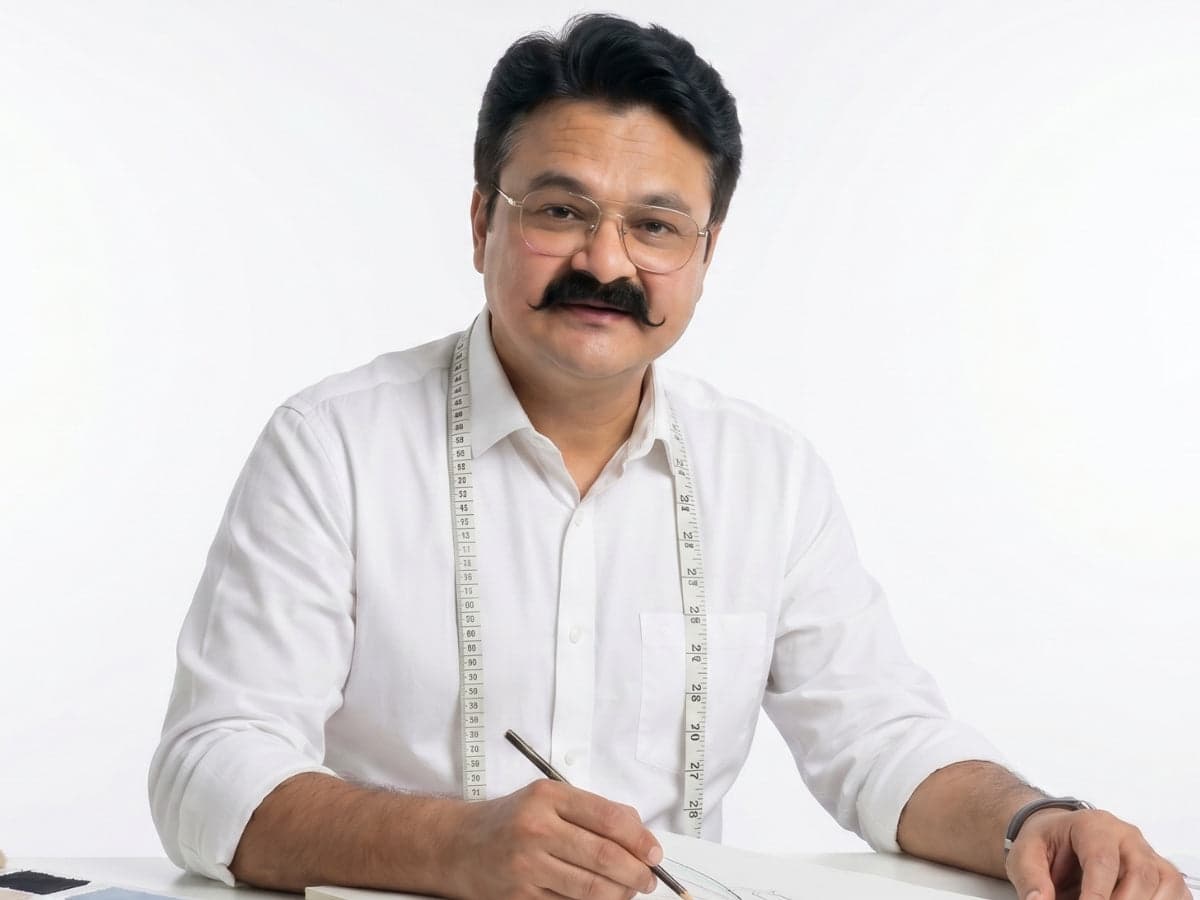
Suman Bharti
Pattern, bone, and the factory floor.
I have been a designer for 25 years and in corsetry for 21 of them. In 2005 I founded Corset Wholesale Ltd in Gurugram, India, and I have run it since — drafting patterns, specifying steel, and answering for every seam that leaves the floor.
Before that I trained at Pearl Academy of Fashion, where I was given the Best Innovative Collection Award, and spent time in London. The factory now supplies corsetry to brands across the United States, the United Kingdom, the European Union and Australia. I also run Luxe Noir, a direct-to-consumer corsetry label.
This site is where I write down what the work actually involves: how a corset pattern is drafted and why it fails, what steel boning does under load, and what happens between a technical drawing and a finished garment in a real factory.
01Featured in
Roadblocks manufactured for start-ups
Young Turk: Small town boy designs corsets for world
Young Turk: Small town boy designs corsets for world
02Selected writing
A history of corsets, told through what they were made of
Five centuries of corsetry read as construction rather than fashion: baleen, coutil, spring steel, the split busk and the metal eyelet — and which of those changes actually changed the garment.
The pattern is not the corset
A corset is four systems working together, and the pattern is only one of them. Most of what goes wrong happens in the other three.
03Enquiries
Press, speaking and technical questions about corsetry.